
Granite imhando yedombo rinocherwa nekuda kwesimba rayo guru, huremu hwayo, kugara kwenguva refu, uye kuramba kwayo ngura. Asi granite inogona kushandiswawo zvakasiyana-siyana - haisi yemasikweya nema rectangles chete! Kutaura zvazviri, tinoshanda nechivimbo nezvikamu zvegranite zvakagadzirwa muzvimiro, makona, uye makomba emhando dzakasiyana-siyana nguva nenguva - nemhedzisiro yakanaka.
Through our state of the art processing, cut surfaces can be exceptionally flat. These qualities make granite the ideal material to create custom-size and custom-design machine bases and metrology components. Granite is:
■ inogadzirwa nemashini
■ yakati sandara kana yachekwa uye yapedzwa
■ inodzivirira ngura
■ yakasimba
■ inogara kwenguva refu
Zvikamu zvegranite zviri nyorewo kuchenesa. Paunenge uchigadzira magadzirirwo akagadzirwa, iva nechokwadi chekusarudza granite nekuda kwekubatsira kwayo kwepamusoro.
ZVINOSHANDISWA PAMUSORO / ZVINOSHANDISWA PAKUPFEKA ZVAKANYANYA
Granite inoshandiswa neZHHIMG pazvigadzirwa zvedu zvemapuratifomu epamusoro ine huwandu hwakawanda hwequartz, izvo zvinoita kuti isaparare kana kukuvara. Mavara edu matema eSuperior ane mwero wakaderera wekunyudzwa kwemvura, zvichideredza mukana wekuti mageji ako ekugadzirisa aite ngura paunenge uchiisa pamapuratifomu. Mavara egranite anopiwa neZHHIMG anoita kuti chiedza chisanyanya kupenya, zvinoreva kuti maziso evanhu vanoshandisa mapuratifomu acho haana simba. Takasarudza mhando dzedu dzegranite tichifunga nezvekuwedzera kupisa mukuedza kuchengetedza chikamu ichi chidiki.
CUSTOM APPLICATIONS
Kana application yako ichida plate ine maumbirwo akagadzirwa, shinda dzakaiswa, mipini kana imwe michina, unofanira kusarudza chinhu chakaita seBlack Jinan Black. Chinhu ichi chechisikigo chinopa kuomarara kwakanyanya, kudzikamisa kutenderera kwakanaka, uye michina iri nani.
Zvakakosha kuziva kuti ruvara rwega harusi chiratidzo chehunhu hwedombo. Kazhinji, ruvara rwegranite rune chekuita nekuvapo kana kusavapo kwezvicherwa, izvo zvingasave nechazvinobatsira pahunhu hunoita kuti plate yepamusoro ive yakanaka. Kune granite dzepingi, grey, uye nhema dzakanakira plate dzepamusoro, pamwe chete negranite nhema, grey, uye pink dzisingakodzeri kushandiswa nemazvo. Hunhu hwakakosha hwegranite, sezvahunoreva pakushandiswa kwayo seplate yepamusoro, hahuna chekuita neruvara, uye ndeidzi dzinotevera:
■ Kuoma (kutsauka pasi pemutoro - kunoratidzwa neModulus of Elasticity)
■ Kuomarara
■ Kuwanda kwehuwandu
■ Kusapfeka zvakanaka
■ Kugadzikana
■ Kuboorwa kwemvura
Takaedza zvinhu zvakawanda zvegranite uye takaenzanisa zvinhu izvi. Pakupedzisira tawana mhedzisiro, granite nhema yeJinan ndiyo yakanakisa yatakamboziva. Granite nhema yeIndian negranite yekuSouth Africa dzakafanana neJinan Black Granite, asi hunhu hwadzo hwepanyama hwakaderera pane hweJinan Black Granite. ZHHIMG icharamba ichitsvaga zvinhu zvakawanda zvegranite pasi rose uye ichaenzanisa hunhu hwadzo hwepanyama.
Kuti mutaure zvakawanda nezve granite yakakodzera basa renyu, ndapota taurai nesuinfo@zhhimg.com.
Vagadziri vakasiyana vanoshandisa zviyero zvakasiyana. Kune zviyero zvakawanda pasi rose.
DIN Standard, ASME B89.3.7-2013 kana Federal Specification GGG-P-463c (Granite Surface Plates) nezvimwewo sehwaro hwezvakatsanangurwa.
Uye tinogona kugadzira ndiro yekuongorora yegranite chaiyo zvichienderana nezvamunoda. Tinokugamuchirai kuti mutibate kana muchida kuziva rumwe ruzivo nezvemamwe mastandard.
Kureba kunogona kutariswa sekuti nzvimbo dzese dziri pamusoro dziri mukati mezvikamu zviviri zvakafanana, pasi pepuranga nedenga. Kuyerwa kwedaro pakati pezvikamu ndiko kureba kwepasi. Kuyerwa uku kureba kunowanzo takura uye kunogona kusanganisira giredhi.
Semuenzaniso, kushivirirana kwe flatness kwemagiredhi matatu akajairika kunotsanangurwa mu federal specification sezvinotsanangurwa nefomula inotevera:
■ Giredhi reLabhoritari AA = (40 + mativi mana akaenzana/25) x .000001" (chikamu chimwe chete)
■ Giredhi reKuongorora A = Giredhi reRabhoritari AA x 2
■ Giredhi reChishandiso Chekushandisa B = Giredhi reLabhoritari AA x 4.
Kune mapuratifomu epamusoro akajairwa, tinovimbisa kuti matinji anochinjika anodarika zvinodiwa nezvinodiwa neizvi. Pamusoro pekuchinjika, ASME B89.3.7-2013 & Federal Specification GGG-P-463c inotaura nezvenyaya dzinosanganisira: kururamisa kudzokororwa kwekuyera, hunhu hwemagranite epamusoro, kupedzisa kwenzvimbo, nzvimbo yekutsigira, kuomarara, nzira dzinogamuchirwa dzekuongorora, kuisa ma threaded inserts, nezvimwewo.
Mapureti epamusoro egranite negranite ekuongorora eZHHIMG anosangana kana kupfuura zvese zvinodiwa zvakanyorwa muchirevo ichi. Parizvino, hapana tsanangudzo chaiyo yemapureti eangle egranite, parallels, kana master squares.
Uye unogona kuwana mafomura emamwe maitiro muDhaunirodha.
Chekutanga, zvakakosha kuchengetedza ndiro yakachena. Guruva rinoputika nemhepo rinowanzova ndiro rinonyanya kukonzera kupwanyika kwendiro, sezvo rinowanzo pinda muzvidimbu zvebasa uye munzvimbo dzinosangana nemagetsi. Chechipiri, vhara ndiro yako kuti uidzivirire kubva kuguruva nekukuvadzwa. Nguva yekupfeka inogona kuwedzerwa nekufukidza ndiro kana isiri kushandiswa, nekutenderera ndiro nguva nenguva kuitira kuti nzvimbo imwe chete isashandise zvakanyanya, uye nekutsiva mapedhi esimbi pakuenzanisa necarbide pads. Zvakare, dzivisa kuisa chikafu kana zvinwiwa pandiro. Cherechedza kuti zvinwiwa zvakawanda zvine carbonic kana phosphoric acid, izvo zvinogona kunyungudutsa zvicherwa zvakapfava uye kusiya makomba madiki pamusoro.
Izvi zvinoenderana nekuti ndiro iri kushandiswa sei. Kana zvichibvira, tinokurudzira kuchenesa ndiro pakutanga kwezuva (kana pabasa) uye zvakare pakupera. Kana ndiro ikasviba, kunyanya nemafuta kana mvura inonamira, inofanira kucheneswa nekukasika.
Chenesa ndiro nguva dzose uchishandisa mvura kana ZHHIMG Waterless surface plate cleaner. Sarudzo yemhinduro dzekuchenesa inokosha. Kana mushonga unonyunguduka ukashandisa (acetone, lacquer thinner, alcohol, nezvimwewo) kupwanyika kwemvura kuchatonhodza pamusoro, uye kuchakanganisa. Muchiitiko ichi, zvakakosha kuti ndiro iite seyakajairika usati waishandisa kana zvikanganiso zvekuyera zvichaitika.
Nguva inodiwa kuti ndiro iite yakajairika inosiyana zvichienderana nehukuru hwendiro, uye huwandu hwechando. Awa imwe chete inofanira kukwana ndiro diki. Maawa maviri anogona kudiwa kuti ndiro hombe dzishandiswe. Kana muchina wekuchenesa wakagadzirwa nemvura ukashandiswa, pachavawo nekutonhora kwemvura.
Ndiro iyi ichachengetedzawo mvura, uye izvi zvinogona kukonzera ngura yezvikamu zvesimbi kana zvasangana nepamusoro. Mamwe machira anosiyawo tsvina inonamira mushure mekunge yaoma, izvo zvinokwezva guruva rinobuda mumhepo, uye zvinotowedzera kupera simba, pane kuideredza.
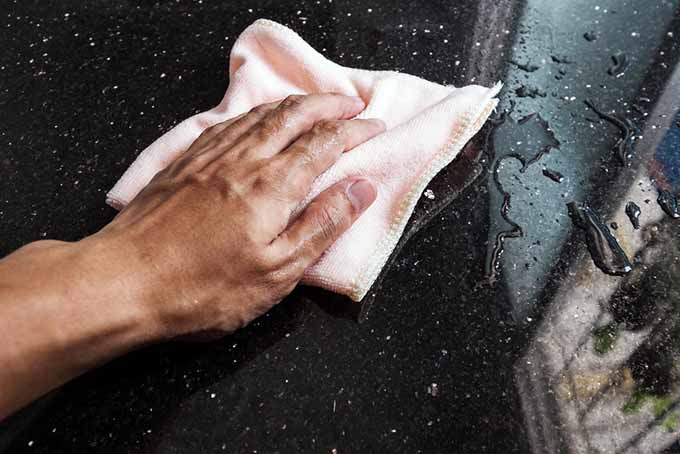
Izvi zvinoenderana nekushandiswa kweplate uye nharaunda. Tinokurudzira kuti plate itsva kana chishongedzo chegranite chakanyatsogadziriswa chigamuchirwe zvizere mukati megore rimwe chete rekutenga. Kana granite surface plate ikashandiswa zvakanyanya, zvingave zvakanaka kupfupisa nguva iyi kusvika kumwedzi mitanhatu. Kuongorora kwemwedzi wega wega kwezvikanganiso zvekuyera kudzokorora uchishandisa Electronic level, kana mudziyo wakafanana kucharatidza chero nzvimbo dziri kuchembera uye zvinongotora maminetsi mashoma kuti zviitike. Mushure mekunge mhedzisiro yekugadziriswa kwekutanga yaonekwa, nguva yekugadziriswa inogona kuwedzerwa kana kupfupiswa sezvinobvumidzwa kana zvinodiwa nesystem yako yemukati mehunhu.
Tinogona kukupa basa rekukubatsira kuongorora nekugadzirisa plate yako yegranite.

Pane zvikonzero zvakawanda zvinogona kukonzera kusiyana pakati pekuenzanisa:
- Pamusoro payo pakagezwa nemushonga unopisa kana unotonhora usati wagadziriswa, uye hapaipiwa nguva yakakwana yekugadzirisa
- Ndiro yacho haina kutsigirwa zvakanaka
- Kuchinja kwetembiricha
- Madhirowa
- Zuva rakananga kana kumwe kupisa kunopenya pamusoro peplate. Iva nechokwadi chekuti mwenje wepamusoro hausi kupisa pamusoro
- Kusiyana kwemamiriro ekunze pakati pechando nezhizha (Kana zvichibvira, zivai mamiriro ekunze panguva iyo kucheneswa kunoitwa).
- Plate haina kubvumidzwa nguva yakakwana yekudzoreredza mushure mekutumirwa
- Kushandisa zvisina kunaka michina yekuongorora kana kushandisa michina isina kurongwa
- Kuchinja kwemusoro kunokonzerwa nekupfekwa
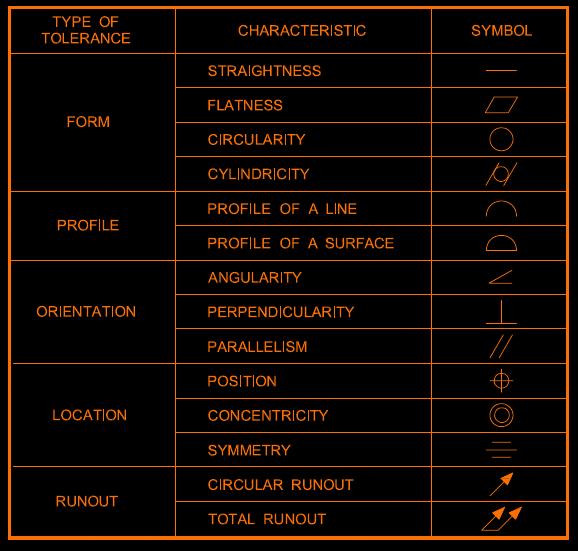
Mangani marudzi emakomba ari pagranite chaiyo?
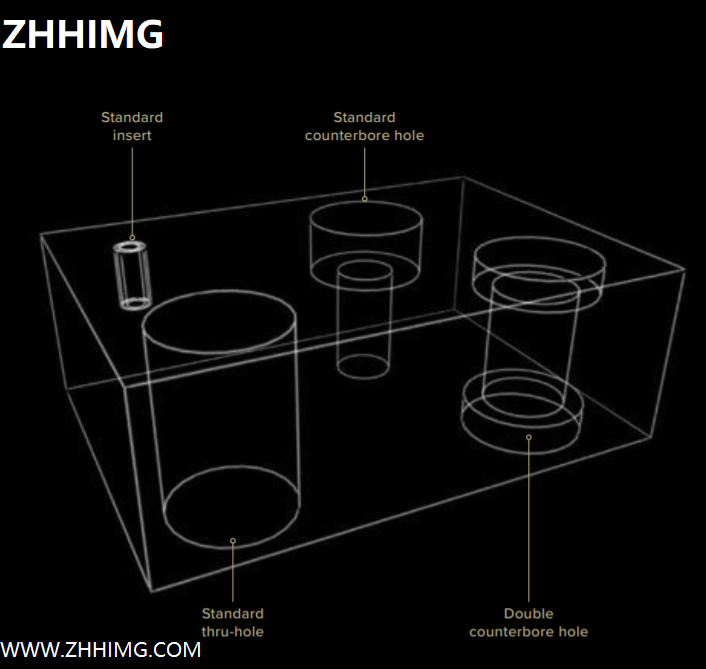
Nzvimbo dzekugadzira magiraidhi ekugadzira magiraidhi akakodzera
Kune mafekitori mazhinji, makamuri ekuongorora nemarabhoritari, mapurati epamusoro egranite anonyatsoshandiswa anoshandiswa pakuyera nemazvo. Nekuti kuyerwa kwega kwega kunoenderana nepamusoro penzvimbo chaiyo inotorwa zviyero zvekupedzisira, mapurati epamusoro anopa nzvimbo yakanakisisa yekutarisa basa uye marongerwo asati agadzirwa. Iwo zvakare mabhesi akakodzera ekugadzira zviyero zvehurefu uye gaging pamusoro. Uyezve, mwero wepamusoro wekuti zvinhu zvakati sandara, kugadzikana, mhando uye hunyanzvi zvinoita kuti zvive sarudzo yakanaka yekuisa masisitimu ekugadzira emakanika, emagetsi uye emaziso. Kune chero ipi zvayo yemaitiro ekuyera aya, zvakakosha kuchengetedza mapurati epamusoro akaongororwa.
Repeat Measurements and Flatness
Kuyera kuti mativi acho akaenzana uye kuti adzokororwe zvakakosha kuti pave nechokwadi chekuti pamusoro pacho pakagadzirwa zvakanaka. Kuti mativi acho akaenzana, zvinogona kuonekwa sekuti nzvimbo dzese dziri pamusoro dziri mukati mezvikamu zviviri zvakafanana, pasi pepuranga nedenga repuranga. Kuyera daro riri pakati pezvikamu ndiko kuti mativi acho akaenzana. Kuyera kuti mativi acho akaenzana kunowanzo enderana uye kunogona kusanganisira giredhi.
The flatness tolerances for three standard grades are defined in the federal specification as determined by the following formula:
DIN Standard, GB Standard, ASME Standard, JJS standard... nyika dzakasiyana dzine nzvimbo dzakasiyana...
In addition to flatness, repeatability must be ensured. A repeat measurement is a measurement of local flatness areas. It is a measurement taken anywhere on the surface of a plate that will repeat within the stated tolerance. Controlling local area flatness to a tighter tolerance than overall flatness guarantees a gradual change in surface flatness profile, thereby minimizing local errors.
Kuti ive nechokwadi chekuti plate yepamusoro inosangana nezvinodiwa zvekuyera zvakati sandara uye zvakadzokororwa, vagadziri vemaplate epamusoro egranite vanofanira kushandisa Federal Specification GGG-P-463c sehwaro hwezvinodiwa zvavo. Mutemo uyu unotarisa kururama kwekuyera kwakadzokororwa, hunhu hwegranite yeplate yepamusoro, kupera kwenzvimbo, nzvimbo yekutsigira, kuomarara, nzira dzinogamuchirwa dzekuongorora uye kuisa mainserts ane shinda.
Checking Plate Accuracy
Nekutevera nhungamiro shoma dziri nyore, mari inoshandiswa muplate yegranite inofanira kugara kwemakore mazhinji. Zvichienderana nekushandiswa kweplate, nzvimbo yekutenga uye kururama kunodiwa, nguva yekutarisa kururama kweplate yepamusoro inosiyana. Mutemo mukuru ndewekuti plate itsva iwane kugadziriswa kwakazara mukati megore rimwe chete rekutenga. Kana plate ichishandiswa kakawanda, zvinokurudzirwa kupfupisa nguva iyi kusvika kumwedzi mitanhatu.
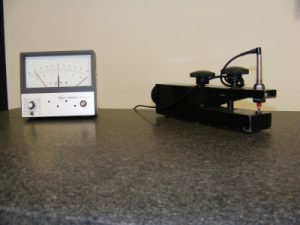
Before a surface plate has worn beyond specification for overall flatness, it will show worn or wavy posts. Monthly inspection for repeat measurement errors using a repeat reading gage will identify wear spots. A repeat reading gage is a high-precision instrument that detects local error and can be displayed on a high magnification electronic amplifier.
An effective inspection program should include regular checks with an autocollimator, providing actual calibration of overall flatness traceable to National Institute of Standards and Technology (NIST). Comprehensive calibration by the manufacturer or an independent company is necessary from time to time.
Variations Between Calibrations
Mune zvimwe zviitiko, pane musiyano pakati pekuongororwa kweplate yepamusoro. Dzimwe nguva zvinhu zvakaita sekushanduka kwenzvimbo kunokonzerwa nekusakara, kushandiswa zvisirizvo kwemidziyo yekuongorora kana kushandiswa kwemidziyo isina kugadziriswa zvinogona kukonzera kusiyana uku. Zvisinei, zvinhu zviviri zvinonyanya kuzivikanwa itembiricha nerutsigiro.
One of the most important variables is temperature. For instance, the surface might have been washed with a hot or cold solution prior to calibration and not allowed sufficient time to normalize. Other causes of temperature change include drafts of cold or hot air, direct sunlight, overhead lighting or other sources of radiant heat on the surface of the plate.
There also can be variations in the vertical temperature gradient between winter and summer. In some cases, the plate is not allowed sufficient time to normalize after shipment. It is a good idea to record the vertical gradient temperature at the time the calibration is performed.
Another common cause for calibration variation is a plate that is improperly supported. A surface plate should be supported at three points, ideally located 20% of the length in from the ends of the plate. Two supports should be located 20% of the width in from the long sides, and the remaining support should be centered.
Only three points can rest solidly on anything but a precision surface. Attempting to support the plate at more than three points will cause the plate to receive its support from various combinations of three points, which will not be the same three points on which it was supported during production. This will introduce errors as the plate deflects to conform to the new support arrangement. Consider using steel stands with support beams designed to line up with the proper support points. Stands for this purpose are generally available from the surface plate manufacturer.
If the plate is properly supported, precise leveling is only necessary if an application specifies it. Leveling is not necessary to maintain the accuracy of a properly supported plate.
Extend Plate Life
Kutevedzera mitemo mishomanana kunoderedza kupera kweplate yegranite uye pakupedzisira, kuchawedzera hupenyu hwayo.
Chekutanga, zvakakosha kuchengetedza ndiro yakachena. Guruva rinoputika nemhepo rinowanzova ndiro rinonyanya kukonzera kusakara kwendiro, sezvo richiwanzopinda muzvishandiso zvebasa uye panzvimbo dzinosangana negeji.
It also is important to cover plates to protect it from dust and damage. Wear life can be extended by covering the plate when not in use.
Tenderedza ndiro nguva nenguva kuitira kuti nzvimbo imwe chete isanyanya kushandiswa. Zvinokurudzirwawo kuti panofanira kutsiva mapedhi esimbi ekubatanidza simbi ne mapedhi ecarbide.
Avoid setting food or soft drinks on the plate. Many soft drinks contain either carbonic or phosphoric acid, which can dissolve the softer minerals and leave small pits in the surface.
Where to Relap
Kana plate yegranite ichida kugadziriswazve, funga kana basa iri richiitwa panzvimbo yacho kana panzvimbo yekuenzanisa. Nguva dzose zviri nani kuti plate yacho idzokororwezve kufekitori kana kune imwe nzvimbo yakatsaurirwa. Zvisinei, kana plate yacho isina kunyanya kukuvara zvakanyanya, kazhinji iri mukati me 0.001 inch yekutsungirira kunodiwa, inogona kugadziriswazve panzvimbo yacho. Kana plate yakapfekwa kusvika padanho rekuti inopfuura 0.001 inch kubva pakushivirira kunodiwa, kana kuti yakakuvara zvakanyanya kana kuti yakakuvara, saka inofanira kutumirwa kufekitori kuti igayiwe isati yadzokororwazve.
A calibration facility has the equipment and factory setting providing the optimum conditions for proper plate calibration and rework if necessary.
Kungwarira kukuru kunofanira kuitwa pakusarudza nyanzvi yekuongorora nekugadziridza denga panzvimbo yacho. Kumbira mvumo uye tarisa kuti michina ichashandiswa nenyanzvi ine chiyero chinoteverwa here. Ruzivo rwakakoshawo, sezvo zvichitora makore akawanda kudzidza kurovera granite nemazvo.
Critical measurements start with a precision granite surface plate as a baseline. By ensuring a reliable reference by using a properly calibrated surface plate, manufacturers have one of the essential tools for reliable measurements and better quality parts.Q
Checklist for Calibration Variations
1. Pamusoro payo pakagezwa nemushonga unopisa kana unotonhora usati wagadziriswa uye hapaipiwa nguva yakakwana yekuigadzirisa.
2. Ndiro yacho haina kutsigirwa zvakanaka.
3. Kuchinja kwetembiricha.
4. Madhirowa.
5. Zuva rakananga kana kumwe kupisa kunopenya pamusoro peplate. Iva nechokwadi chekuti mwenje wepamusoro hausi kupisa pamusoro.
6. Kusiyana kwemamiriro ekunze pakati pechando nezhizha. Kana zvichibvira, ziva mamiriro ekunze panguva iyo kuenzanisa kunoitwa.
7. Plate haina kubvumidzwa nguva yakakwana yekuigadzirisa mushure mekutumira.
8. Kushandiswa zvisina kunaka kwemidziyo yekuongorora kana kushandisa michina isina kurongwa.
9. Kuchinja kweganda kunokonzerwa nekupfekwa.
Tech Tips
- Nekuti kuyerwa kwese kwemutsara kunoenderana nepamusoro pekutarisa kwakarurama uko zviyero zvekupedzisira zvinotorwa, mapurati epamusoro anopa nzvimbo yakanakisa yekutarisa uye kuronga basa risati raitwa.
- Controlling local area flatness to a tighter tolerance than overall flatness guarantees a gradual change in surface flatness profile, thereby minimizing local errors.
- Chirongwa chekuongorora chinoshanda chinofanira kusanganisira kuongororwa nguva nenguva ne autocollimator, zvichipa kuyera kwacho kwese kwakadzikama kunoteverwa neNational Inspection Authority.
Pakati pezvinhu zvicherwa zvinoumba granite, zvinopfuura 90% i feldspar ne quartz, izvo feldspar ndiyo yakawanda. Feldspar inowanzova chena, grey, uye tsvuku-nyama, uye quartz inonyanya kuva chena isina ruvara kana grey, iyo inoumba ruvara rwegranite. Feldspar ne quartz zvicherwa zvakaoma, uye zvakaoma kufambisa nebanga resimbi. Kana dziri nzvimbo dzakasviba dziri mugranite, kunyanya mica nhema, kune zvimwe zvicherwa. Kunyangwe biotite yakapfava, kugona kwayo kuramba kushushikana hakuna kusimba, uye panguva imwe chete ine huwandu hushoma mugranite, kazhinji isingasviki 10%. Iyi ndiyo mamiriro ezvinhu umo granite yakasimba zvikuru.
Chimwe chikonzero chinoita kuti granite ive yakasimba ndechekuti zvicherwa zvayo zvakabatana zvakasimba uye zvinopindana. Maburi anowanzoita pasi pe1% yehuwandu hwese hwedombo. Izvi zvinoita kuti granite ikwanise kumira kumanikidzwa kwakasimba uye haipindike nyore nyore neunyoro.
Zvikamu zvegranite zvakagadzirwa nematombo zvisina ngura, acid uye alkali resistance, zvinoramba zvakasakara zvakanaka uye zvinogara kwenguva refu, hazvina kugadziriswa kwakakosha. Zvikamu zvegranite resistance zvinonyanya kushandiswa muindasitiri yemichina. Saka, zvinonzi granite precision components kana granite components. Hunhu hwezvikamu zvegranite precision hwakafanana nehwemapuratifomu egranite. Nhanganyaya yekushandiswa kwezvishandiso uye kuyerwa kwezvikamu zvegranite precision: Kushandiswa kwemashini nemazvo uye micro machining tekinoroji inzira dzakakosha dzekuvandudza indasitiri yekugadzira michina, uye zvave chiratidzo chakakosha chekuyera nhanho yepamusoro-soro. Kuvandudzwa kwetekinoroji yepamusoro uye indasitiri yekudzivirira hazviparadzanisike kubva kune chaiyo machining uye micro-machining tekinoroji. Zvikamu zvegranite zvinogona kutsvedza zvakanaka mukuyera, pasina kumira. Kuyerwa kwepamusoro pebasa, kukwenya kwakajairika hakukanganisi kururama kwekuyera. Zvikamu zvegranite zvinoda kugadzirwa uye kugadzirwa zvinoenderana nezvinodiwa nedivi rekudiwa.
Munda wekushandisa:
Sezvatinoziva tese, michina nemidziyo yakawanda iri kusarudza zvikamu zvegranite zvakanyatsonaka.
Zvikamu zvegranite zvinoshandiswa pakufamba kwesimba, mota dzakatwasuka, cmm, cnc, muchina welaser...
Tinokugamuchirai kuti mutibate kuti muwane rumwe ruzivo.
Zvishandiso zvekuyera granite uye zvikamu zvegranite zvakagadzirwa negranite nhema yemhando yepamusoro. Nekuda kwekunyatsorongeka kwayo, kugara kwenguva refu, kugadzikana kwayo uye kuramba kwayo ngura, zvave zvichishandiswa zvakanyanya mukuongorora zvigadzirwa zveindasitiri yemazuva ano nenzvimbo dzesainzi dzakadai senzvimbo yemuchina yemhepo uye tsvakurudzo dzesainzi.
Zvakanakira
----Yakasimba kaviri kupfuura simbi yakakandwa ;
----Kuchinja kudiki kwehukuru kunokonzerwa nekuchinja kwetembiricha;
----Haisi yekukwenya, saka hapana kukanganiswa kwebasa ;
----Haina maburi kana maburi anobuda nekuda kwechimiro chezviyo zvakapfava uye kunamira kushoma, izvo zvinoita kuti ive yakatsetseka kwenguva refu uye isingakanganisi zvimwe zvikamu kana zviridzwa;
----Kushanda kusina matambudziko kwekushandisa nezvinhu zvemagineti;
----Inogara kwenguva refu uye isina ngura, zvichikonzera mari shoma yekugadzirisa.
Mapureti epamusoro egranite akanyatsogadzirwa akanyatsogadzirwa kuti asvike padanho repamusoro kuti anyatsogadzirwa uye anoshandiswa sehwaro hwekuisa masisitimu ekugadzira emakanika, emagetsi uye ekuona.
Zvimwe zvezvinhu zvakasiyana zveplate yegranite pamusoro:
Kufanana muKuoma;
Mamiriro Ezvinhu Akarurama Ari Mutoro;
Kubata Kudedera;
Zviri Nyore Kuchenesa;
Kupikisa Kuputira;
Kuderera kwePorosity;
Hazvina Kugumbura;
Isina Magneti
Mabhenefiti eGranite Surface Plate
First, the rock after a long period of natural aging, uniform structure, coefficient minimum, the internal stress completely disappear, not deformed, so the precision is high.
Tumira Email
Skype
Chirungu
ChiJerimani
ChiFrench
ChiPutukezi
ChiSpanish
ChiJapanese
ChiKorean
ChiArabic
ChiIrish
ChiGiriki
ChiTurkey
ChiItalian
ChiDanish
ChiRomanian
ChiIndonesian
ChiCzech
ChiSwedish
ChiPolish
ChiBasque
Katarani
Esiperando
ChiHindi
Layo
ChiAlbanian
ChiAmharic
ChiArmenian
ChiAzerbaijani
Chiberaruzi
PChiBengali
ChiBosnian
ChiBulgarian
ChiCebuano
Chichewa
Kosikeni
ChiCroatian
ChiDutch
ChiEstonian
ChiFilipino
ChiFinish
ChiFrisian
ChiGalician
ChiGeorgian
ChiGujarati
chiHaiti
ChiHausa
ChihawayiChiHebhuruChiHmong
ChiHungarianChiIcelandicChiIgbo
ChiJavaneseChiKannada
Kazaki
ChiKhmer
ChiKedhi
Kiyagizi
Ratini
ChiLatvian
Ritunia
Luxembou..
ChiMacedonian
ChiMalagasy
ChiMalay
ChiMalayalam
ChiMaltese
Maori
ChiMarati
ChiMongoria
ChiBurmese
ChiNepali
ChiNorwegian
Pashito
ChiPersian
Punjabi
ChiSebhiya
Sesotho
ChiSinhala
ChiSlovak
- ChiSlovanian
- Somari
- ChiSamoa
- ChiScots Gaelic
- Shona
- ChiSindhi
- ChiSundanese
- ChiSwahili
- Tajik
- ChiTamil
- ChiTelugu
ChiThai
ChiUkraine
ChiUrduAChiUzbek2ChiVietnameseLChiWelshAXhosa
ChiYiddish
ChiYoruba
ChiZulu
Kinyarwanda
ChiTatar
ChiTeki
Ugwa
ChiChinese
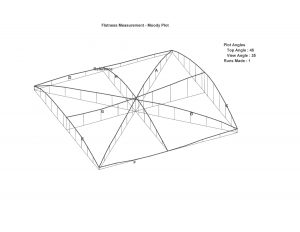
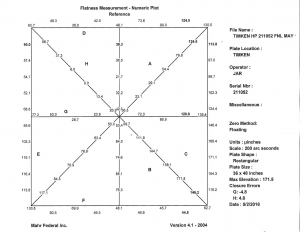
Routine surface plate calibration is necessary to ensure flatness and repeatability over time. The precision measurement group at Cross is ISO 17025 accredited for calibration of surface plate flatness and repeatability. We utilize the Mahr Surface Plate Certification System featuring:
- Moody and Profile Analysis,
- Isometric or Numeric plots,
- Multiple Run Average, and
- Automatic Grading According to Industry Standards.
The Mahr Computer Assisted Model determines any angular or linear deviation from absolute level, and is ideally suited for highly precise profiling of surface plates.
Intervals between calibrations will vary depending on the frequency of use, the environmental conditions where the plate is located, and the specific quality requirements of your company. Properly maintaining your surface plate may allow for longer intervals between each calibration, helps you avoid the added cost of relapping, and most importantly ensures the measurements you obtain on the plate are as accurate as possible. Although surface plates appear robust, they are precision instruments and should be treated as such. Here are some things to consider regarding care of your surface plates:
- Keep the plate clean, and if possible cover it when it is not in use
- Nothing should be placed on the plate other than gages or pieces to be measured.
- Don’t use the same spot on the plate every time.
- If possible, rotate the plate periodically.
- Respect the load limit of your plate
Precision Granite Base Can Improve Machine Tool Performances
Requirements are constantly increasing in mechanical engineering in general and in machine tool construction in particular. Achieving maximum precision and performance values without increasing costs are constant challenges to being competitive. The machine tool bed is a decisive factor here. Therefore, more and more machine tool manufacturers are relying on granite. Due to its physical parameters, it offers clear advantages that cannot be achieved with steel or polymer concrete.
Granite is a so-called volcanic deep rock and has a very dense and homogeneous structure with an extremely low coefficient of expansion, low thermal conductivity and high vibration damping.
Below you will discover why the common opinion that granite is mainly only suitable as machine base for high-end coordinate measuring machines is long outdated and why this natural material as a machine tool base is a very advantageous alternative to steel or cast iron even for high-precision machine tools.
We can manufacture granite components for dynamic motion, granite components for linear motors, granite components for ndt, granite components for xray, granite components for cmm, granite components for cnc, granite precision for laser, granite components for aerospace, granite components for precision stages...
High Added Value Without Additional Costs
The increasing use of granite in mechanical engineering is not so much due to the massive increase in the price of steel. Rather, it is because the added value for the machine tool achieved with a machine bed made of granite is possible at very little or no extra cost. This is proven by cost comparisons of well-known machine tool manufacturers in Germany and Europe.
The considerable gain in thermodynamic stability, vibration damping and long-term precision made possible by granite cannot be achieved with a cast iron or steel bed, or only at relatively high cost. For example, thermal errors can account for up to 75% of the total error of a machine, with compensation often attempted for by software – with moderate success. Due to its low thermal conductivity, granite is the better foundation for long-term precision.
With a tolerance of 1 μm, granite easily meets the flatness requirements according to DIN 876 for the degree of accuracy 00. With a value of 6 on the hardness scale 1 to 10, it is extremely hard, and with its specific weight of 2.8g/cm³ it almost reaches the value of aluminium. This also results in additional advantages such as higher feed rates, higher axis accelerations and an extension of the tool life for cutting machine tools. Thus, the change from a cast bed to a granite machine bed moves the machine tool in question into the high-end class in terms of precision and performance – at no extra cost.
Granite’s Improved Ecological Footprint
In contrast to materials such as steel or cast iron, natural stone does not have to be produced with a great deal of energy and using additives. Only relatively small amounts of energy are required for quarrying and surface treatment. This results in a superior ecological footprint, which even at the end of a machine’s life surpasses that of steel as a material. The granite bed can be the basis for a new machine or be used for completely different purposes such as shredding for road construction.
Nor are there any shortages of resources for granite. It is a deep rock formed from magma within the earth’s crust. It has ‘matured’ for millions of years and is available in very large quantities as a natural resource on almost all continents, including all of Europe.
Conclusion: The numerous demonstrable advantages of granite compared to steel or cast iron justify the increasing willingness of mechanical engineers to use this natural material as a foundation for high-precision, high-performance machine tools. Detailed information about granite properties, which are advantageous for machine tools and mechanical engineering, can be found in this further article.
A repeat measurement is a measurement of local flatness areas. The Repeat Measurement specification states that a measurement taken anywhere on the surface of a plate will repeat within the stated tolerance. Controlling local area flatness tighter than overall flatness guarantees a gradual change in surface flatness profile thereby minimizing local errors.
Most manufacturers, including imported brands, adhere to the Federal Specification of overall flatness tolerances but many overlook the repeat measurements. Many of the low value or budget plates available in the market today will not guarantee repeat measurements. A manufacturer who does not guarantee repeat measurements is NOT producing plates that meet the requirements of ASME B89.3.7-2013 or Federal Specification GGG-P-463c, or DIN 876, GB, JJS...
Both are critical to ensure a precision surface for accurate measurements. Flatness specification alone is not sufficient to guarantee measurement accuracy. Take as an example, a 36 X 48 Inspection Grade A surface plate, which meets ONLY the flatness specification of .000300". If the piece being checked bridges several peaks, and the gage being used is in a low spot, the measurement error could be the full tolerance in one area, 000300"! Actually, it can be much higher if the gage is resting on the slope of an incline.
Errors of .000600"-.000800" are possible, depending upon the severity of the slope, and the arm length of the gage being used. If this plate had a Repeat Measurement specification of .000050"F.I.R. then the measurement error would be less than .000050" regardless of where the measurement is taken on the plate. Another problem, which usually arises when an untrained technician attempts to resurface a plate on-site, is the use of Repeat Measurements alone to certify a plate.
The instruments that are used to verify repeatability are NOT designed to check overall flatness. When set to zero on a perfectly curved surface, they will continue to read zero, whether that surface is perfectly flat or perfectly concave or convex 1/2"! They simply verify the uniformity of the surface, not the flatness. Only a plate that meets both the flatness specification AND the repeat measurement specification truly meets the requirements of ASME B89.3.7-2013 or Federal Specification GGG-P-463c.
Ask us about or flatness specification and repeat measurement promise by calling +86 19969991659 or emailing INFO@ZHHIMG.COM
Yes, but they can only be guaranteed for a specific vertical temperature gradient. The effects of thermal expansion on the plate could easily cause a change in accuracy greater than the tolerance if there is a change in the gradient. In some cases, if the tolerance is tight enough, the heat absorbed from overhead lighting can cause enough of a gradient change over several hours.
Granite has a coefficient of thermal expansion of approximately .0000035 inches per inch per 1°F. As an example: A 36" x 48" x 8" surface plate has an accuracy of .000075" (1/2 of Grade AA) at a gradient of 0°F, the top and bottom are the same temperature. If the top of the plate warms up to the point where it is 1°F warmer than the bottom, the accuracy would change to .000275" convex ! Therefore, ordering a plate with a tolerance tighter than Laboratory Grade AA should only be considered if there is adequate climate control.
A surface plate should be supported at 3 points, ideally located 20% of the length in from the ends of the plate. Two supports should be located 20% of the width in from the long sides, and the remaining support should be centered. Only 3 points can rest solidly on anything but a precision surface.
The plate should be supported at these points during production, and it should be supported only at these three points while in use. Attempting to support the plate at more than three points will cause the plate to receive its support from various combinations of three points, which will not be the same 3 points on which it was supported during production. This will introduce errors as the plate deflects to conform to the new support arrangement. All zhhimg steel stands have support beams designed to line up with the proper support points.
If the plate is properly supported, precise leveling is only necessary if your application calls for it. Leveling is not necessary to maintain the accuracy of a properly supported plate.
Why Choose Granite for Machine Bases and Metrology Components?
The answer is 'yes' for almost every application. The advantages of granite include: No rust or corrosion, almost immune to warping, no compensating hump when nicked, longer wear life, smoother action, greater precision, virtually non-magnetic, low co-efficient of thermal expansion, and low maintenance cost.
Granite is a type of igneous rock quarried for its extreme strength, density, durability, and resistance to corrosion. But granite is also very versatile– it’s not just for squares and rectangles! In fact, Starrett Tru-Stone confidently works with granite components engineered in shapes, angles, and curves of all variations on a regular basis—with excellent outcomes.
Through our state of the art processing, cut surfaces can be exceptionally flat. These qualities make granite the ideal material to create custom-size and custom-design machine bases and metrology components. Granite is:
machineable
precisely flat when cut and finished
rust resistant
durable
long lasting
Granite components are also easy to clean. When creating custom designs, be sure to choose granite for its superior benefits.
STANDARDS / HIGH WEAR APPLICATIONS
The granite utilized by ZhongHui for our standard surface plate products has high quartz content, which provides greater resistance to wear and damage. Our Superior Black and Crystal Pink colors have low water absorption rates, minimizing the possibility of your precision gages rusting while setting on the plates. The colors of granite offered by ZhongHui result in less glare, which means less eyestrain for individuals using the plates. We have chosen our granite types while considering thermal expansion in an effort to keep this aspect minimal.
CUSTOM APPLICATIONS
When your application calls for a plate with custom shapes, threaded inserts, slots or other machining, you’ll want to select a material like Black Diabase. This natural material offers superior stiffness, excellent vibration dampening, and improved machinability.
Yes, if they are not too badly worn. Our factory setting and equipment allow the optimum conditions for proper plate calibration and rework if necessary. Generally, if a plate is within .001" of the required tolerance, it can be resurfaced on-site. If a plate is worn to the point where it is more than .001" out of tolerance, or if it is badly pitted or nicked, then it will need to be sent to the factory for grinding prior to relapping.
Great care should be exercised in selecting an on-site calibration and resurfacing technician. We urge you to use caution in selecting your calibration service. Ask for accreditation and verify the equipment that the technician will use has a National Inspection Institution traceable calibration. It takes many years to learn how to properly lap precision granite.
ZhongHui provides quick turn-around on calibrations performed in our factory. Send your plates in for calibration if possible. Your quality and reputation depend on the accuracy of your measurement instruments including surface plates!
Our black surface plates have a significantly higher density and are up to three times as stiff. Therefore, a plate made of the black does not need to be as thick as a granite plate of the same size to have equal or greater resistance to deflection. Reduced thickness means less weight and lower shipping costs.
Beware of others who use lower quality black granite in the same thickness. As stated above, properties of granite, like wood or metal, vary by material and color, and is not an accurate predictor of stiffness, hardness, or wear resistance. In fact, many types of black granite and diabase are very soft and not suitable for surface plate applications.
No. The specialized equipment and training necessary to rework these items requires that they be returned to the factory for calibration and rework.
Yes. Ceramic and granite have similar characteristics, and the methods used to calibrate and lap granite can be used with ceramic items as well. Ceramics are more difficult to lap than granite resulting in a higher cost.
Yes, provided that the inserts are recessed below the surface. If steel inserts are flush with, or above the surface plane, they must be spot-faced down before the plate can be lapped. If required, we can provide that service.
Yes. Steel inserts with the desired thread (English or metric) can be epoxy bonded into the plate at the desired locations. ZhongHui uses CNC machines to provide the tightest insert locations within +/- 0.005”. For less critical inserts, our locational tolerance for threaded inserts is ±.060". Other options include steel T-Bars and dovetail slots machined directly into the granite.
Inserts that are properly bonded using high strength epoxy and good workmanship will withstand a great deal of torsional and shear force. In a recent test, using 3/8"-16 threaded inserts, an independent testing laboratory measured the force required to pull an epoxy-bonded insert from a surface plate. Ten plates were tested. Out of these ten, in nine cases, the granite fractured first. The average load at the point of failure was 10,020 lbs. for gray granite and 12,310 lbs. for black. In the single case where an insert pulled free of the plate, the load at the point of failure was 12,990 lbs.! If a work piece forms a bridge across the insert and extreme torque is applied, it is possible to generate enough force to fracture the granite. Partially for this reason, ZhongHui gives guidelines for the maximum safe torque that can be applied the epoxy bonded inserts: https://www.zhhimg.com/standard-thread-inserts-product/
Yes, but only at our factory. At our plant, we can restore almost any plate to 'like-new' condition, usually for less than half the cost of replacing it. Damaged edges can be cosmetically patched, deep grooves, nicks, and pits can be ground out, and the attached supports can be replaced. In addition, we can modify your plate to increase its versatility by adding solid or threaded steel inserts and cutting slots or clamping lips, per your specifications.
Why Choose Granite?
Granite is a type of igneous rock formed in the Earth millions of years ago. The composition of igneous rock contained many minerals such as quartz that is extremely hard and wear-resistant. In addition to hardness and wear resistance granite has approximately half the coefficient of expansion as cast iron. As its volumetric weight is approximately one third that of cast iron, granite is easier to manoeuvre.
For machine bases and metrology components, black granite is the colour most used. Black granite has a higher percentage of quartz than other colours and is, therefore, the hardest wearing.
Granite is cost-effective, and cut surfaces can be exceptionally flat. Not only can it be hand lapped to achieve extremes of accuracy, but re-conditioning can be performed without moving the plate or table off-site. It is entirely a hand lapping operation and generally costs much less than re-conditioning a cast iron alternative.
These qualities make granite the ideal material to create custom-size and custom-design machine bases and metrology components such as the granite surface plate.
ZhongHui produces bespoke granite products that are created to support specific measurement requirements. These bespoke items vary from straight edges to tri squares. Due to the versatile nature of granite, the components can be produced to any size required; they are hard wearing and long-lasting.
Advantages of Granite Surface Plates
The importance of measuring on an even surface was established by British inventor Henry Maudsley in the 1800s. As a machine tool innovator, he determined that consistent production of parts required a solid surface for reliable measurements.
The industrial revolution created a demand for measuring surfaces, so engineering company Crown Windley created manufacturing standards. The standards for surface plates were first set by Crown in 1904 using metal. As the demand and cost for metal increased, alternative materials for the measuring surface were investigated.
In America, monument creator Wallace Herman established that black granite was an excellent surface plate material alternative to metal. As granite is non-magnetic and doesn’t rust, it soon became the preferred measuring surface.
A granite surface plate is an essential investment for laboratories and test facilities. A granite surface plate of 600 x 600 mm can be mounted on a support stand. The stands provide a working height of 34” (0.86m) with five adjustable points for levelling.
For reliable and consistent measurement results, a granite surface plate is crucial. As the surface is a smooth and stable plane, it enables instruments to be carefully manipulated.
The main advantages of granite surface plates are:
• Non-reflective
• Resistant to chemicals and corrosion
• Low coefficient of expansion compared with cart iron so less affected by temperature change
• Naturally rigid and hard-wearing
• The plane of the surface is unaffected if scratched
• Will not rust
• Non-magnetic
• Easy to clean and maintain
• Calibration and resurfacing can be done onsite
• Suitable for drilling for threaded support inserts
• High vibration damping
For many shops, inspection rooms and laboratories, precision granite surface plates are relied on as the basis for accurate measurement. Because every linear measurement depends on an accurate reference surface from which final dimensions are taken, surface plates provide the best reference plane for work inspection and layout prior to machining. They also are ideal bases for making height measurements and gaging surfaces. Further, a high degree of flatness, stability, overall quality and workmanship make them a good choice for mounting sophisticated mechanical, electronic and optical gaging systems. For any of these measurement processes, it is imperative to keep surface plates calibrated.
Repeat Measurements and Flatness
Both flatness and repeat measurements are critical to ensure a precision surface. Flatness can be considered as all points on the surface being contained within two parallel planes, the base plane and the roof plane. The measurement of distance between the planes is the overall flatness of the surface. This flatness measurement commonly carries a tolerance and may include a grade designation.
The flatness tolerances for three standard grades are defined in the federal specification as determined by the following formula:
Laboratory Grade AA = (40 + diagonal² / 25) x 0.000001 inch (unilateral)
Inspection Grade A = Laboratory Grade AA x 2
Tool Room Grade B = Laboratory Grade AA x 4
In addition to flatness, repeatability must be ensured. A repeat measurement is a measurement of local flatness areas. It is a measurement taken anywhere on the surface of a plate that will repeat within the stated tolerance. Controlling local area flatness to a tighter tolerance than overall flatness guarantees a gradual change in surface flatness profile, thereby minimizing local errors.
To ensure a surface plate meets both the flatness and repeat measurement specifications, manufacturers of granite surface plates should use Federal Specification GGG-P-463c as a basis for their specifications. This standard addresses repeat measurement accuracy, material properties of surface plate granites, surface finish, support point location, stiffness, acceptable methods of inspection and installation of threaded inserts.
Before a surface plate has worn beyond specification for overall flatness, it will show worn or wavy posts. Monthly inspection for repeat measurement errors using a repeat reading gage will identify wear spots. A repeat reading gage is a high-precision instrument that detects local error and can be displayed on a high magnification electronic amplifier.
Checking Plate Accuracy
By following a few simple guidelines, an investment in a granite surface plate should last for many years. Depending on plate usage, shop environment and required accuracy, frequency of checking the surface plate accuracy varies. A general rule of thumb is for a new plate to receive a full recalibration within one year of purchase. If the plate is used frequently, it is advisable to shorten this interval to six months.
Before a surface plate has worn beyond specification for overall flatness, it will show worn or wavy posts. Monthly inspection for repeat measurement errors using a repeat reading gage will identify wear spots. A repeat reading gage is a high-precision instrument that detects local error and can be displayed on a high magnification electronic amplifier.
An effective inspection program should include regular checks with an autocollimator, providing actual calibration of overall flatness traceable to National Institute of Standards and Technology (NIST). Comprehensive calibration by the manufacturer or an independent company is necessary from time to time.
Variations Between Calibrations
In some cases, there are variations between surface plate calibrations. Sometimes factors such as surface change resulting from wear, incorrect use of inspection equipment or use of noncalibrated equipment can account for these variations. The two most common factors, however, are temperature and support.
One of the most important variables is temperature. For instance, the surface might have been washed with a hot or cold solution prior to calibration and not allowed sufficient time to normalize. Other causes of temperature change include drafts of cold or hot air, direct sunlight, overhead lighting or other sources of radiant heat on the surface of the plate.
There also can be variations in the vertical temperature gradient between winter and summer. In some cases, the plate is not allowed sufficient time to normalize after shipment. It is a good idea to record the vertical gradient temperature at the time the calibration is performed.
Another common cause for calibration variation is a plate that is improperly supported. A surface plate should be supported at three points, ideally located 20% of the length in from the ends of the plate. Two supports should be located 20% of the width in from the long sides, and the remaining support should be centered.
Only three points can rest solidly on anything but a precision surface. Attempting to support the plate at more than three points will cause the plate to receive its support from various combinations of three points, which will not be the same three points on which it was supported during production. This will introduce errors as the plate deflects to conform to the new support arrangement. Consider using steel stands with support beams designed to line up with the proper support points. Stands for this purpose are generally available from the surface plate manufacturer.
If the plate is properly supported, precise leveling is only necessary if an application specifies it. Leveling is not necessary to maintain the accuracy of a properly supported plate.
It is important to keep the plate clean. Airborne abrasive dust is usually the greatest source of wear and tear on a plate, as it tends to embed in workpieces and the contact surfaces of gages. Cover plates to protect them from dust and damage. Wear life can be extended by covering the plate when not in use.
Extend Plate Life
Following a few guidelines will reduce wear on a granite surface plate and ultimately, extend its life.
First, it is important to keep the plate clean. Airborne abrasive dust is usually the greatest source of wear and tear on a plate, as it tends to embed in workpieces and the contact surfaces of gages.
It also is important to cover plates to protect it from dust and damage. Wear life can be extended by covering the plate when not in use.
Rotate the plate periodically so that a single area does not receive excessive use. Also, it is recommended to replace steel contact pads on gaging with carbide pads.
Avoid setting food or soft drinks on the plate. Many soft drinks contain either carbonic or phosphoric acid, which can dissolve the softer minerals and leave small pits in the surface.
Where to Relap
When a granite surface plate needs re-surfacing, consider whether to have this service performed on-site or at the calibration facility. It is always preferable to have the plate relapped at the factory or a dedicated facility. If, however, the plate is not too badly worn, generally within 0.001 inch of the required tolerance, it can be resurfaced on-site. If a plate is worn to the point where it is more than 0.001 inch out of tolerance, or if it is badly pitted or nicked, then it should be sent to the factory for grinding prior to relapping.
A calibration facility has the equipment and factory setting providing the optimum conditions for proper plate calibration and rework if necessary.
Great care should be exercised in selecting an on-site calibration and resurfacing technician. Ask for accreditation and verify the equipment that the technician will use has a NIST-traceable calibration. Experience also is an important factor, as it takes many years to learn how to correctly lap precision granite.
Critical measurements start with a precision granite surface plate as a baseline. By ensuring a reliable reference by using a properly calibrated surface plate, manufacturers have one of the essential tools for reliable measurements and better quality parts.
Checklist for Calibration Variations
- The surface was washed with a hot or cold solution prior to calibration and was not allowed sufficient time to normalize.
- The plate is improperly supported.
- Temperature change.
- Drafts.
- Direct sunlight or other radiant heat on the surface of the plate. Be sure that overhead lighting is not heating the surface.
- Variations in the vertical temperature gradient between winter and summer. If at all possible, know the vertical gradient temperature at the time the calibration is performed.
- Plate not allowed sufficient time to normalize after shipment.
- Improper use of inspection equipment or use of noncalibrated equipment.
- Surface change resulting from wear.
Tech Tips
Because every linear measurement depends on an accurate reference surface from which final dimensions are taken, surface plates provide the best reference plane for work inspection and layout prior to machining.
Controlling local area flatness to a tighter tolerance than overall flatness guarantees a gradual change in surface flatness profile, thereby minimizing local errors.